✓ US FDA 510(k) Cleared
✓ CE Certified

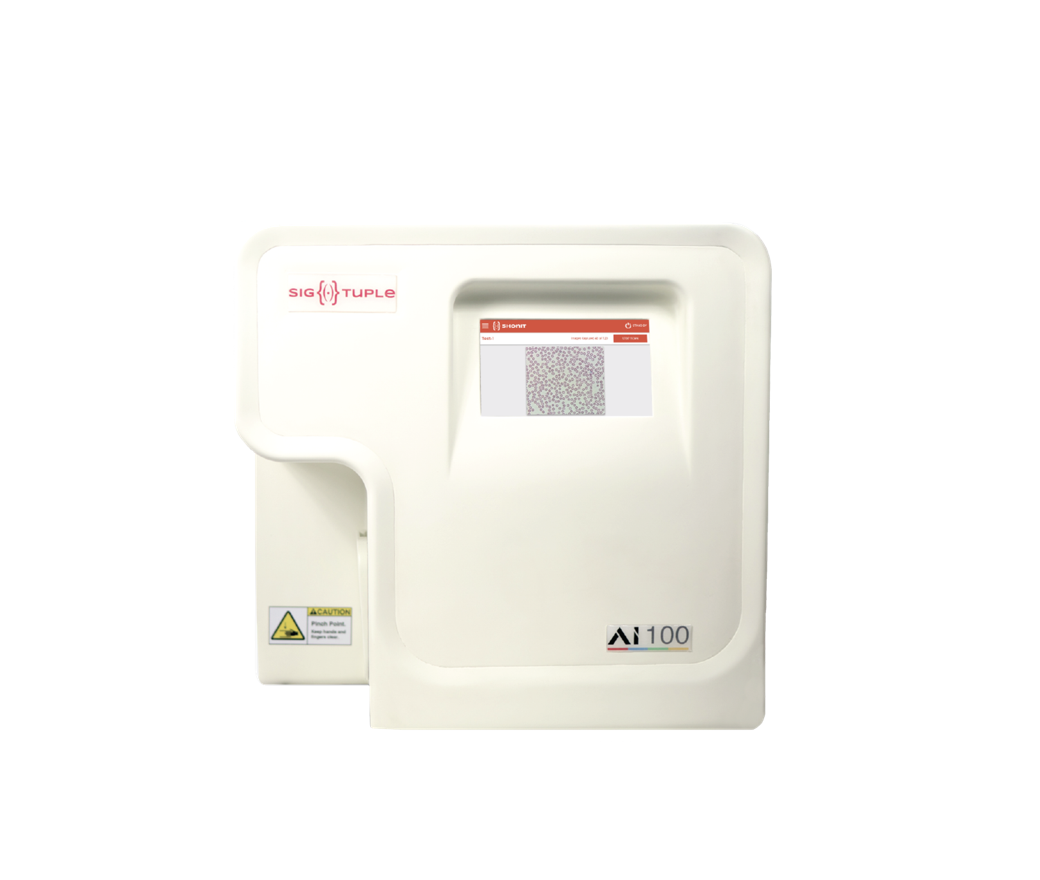
AI100

Automated peripheral blood smear and urine sediment analyser

An in-vitro diagnostic device designed to automate manual microscopy in a diagnostic laboratory. It uses robotics and AI to digitize blood and urine samples on a glass slide to enable AI aided remote review
Contact Sales
SigTuple AI100
SigTuple AI100
AI-Powered Automated Digital Microscope
2
Applications
20+
Blood slides/hr
40+
Urine samples/hr
40×
Magnification
See It In Action

AI100 in the real world

Watch how AI100 can transform your lab's workflow. Simple. Quick. Accurate.

Features

Built for clinical excellence

Three core capabilities that make AI100 the most versatile digital microscopy device on the market.

One device,
multiple tests!

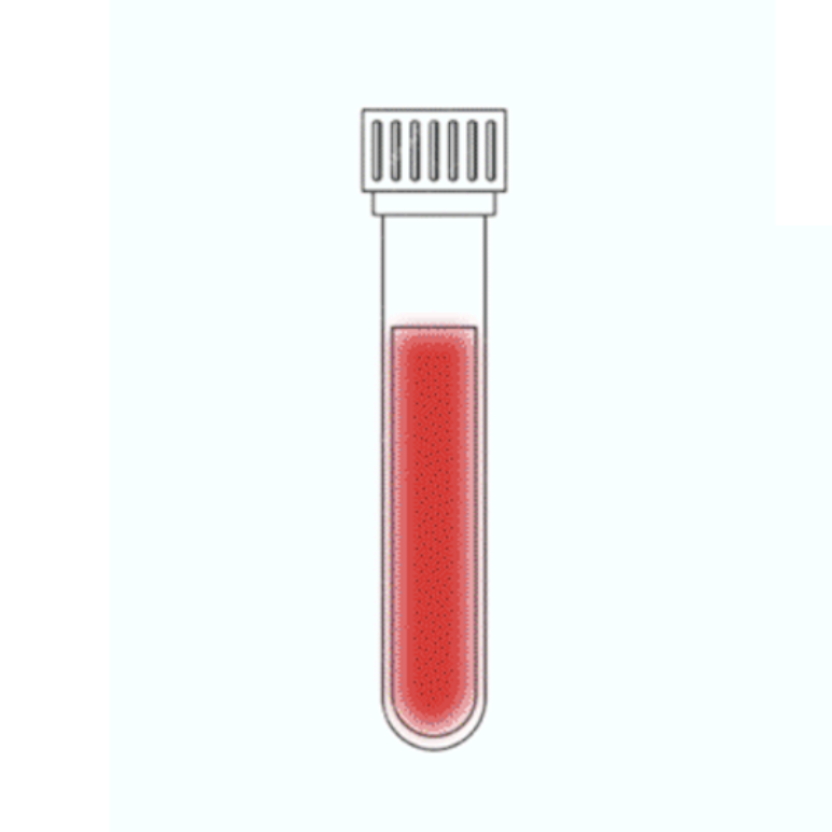
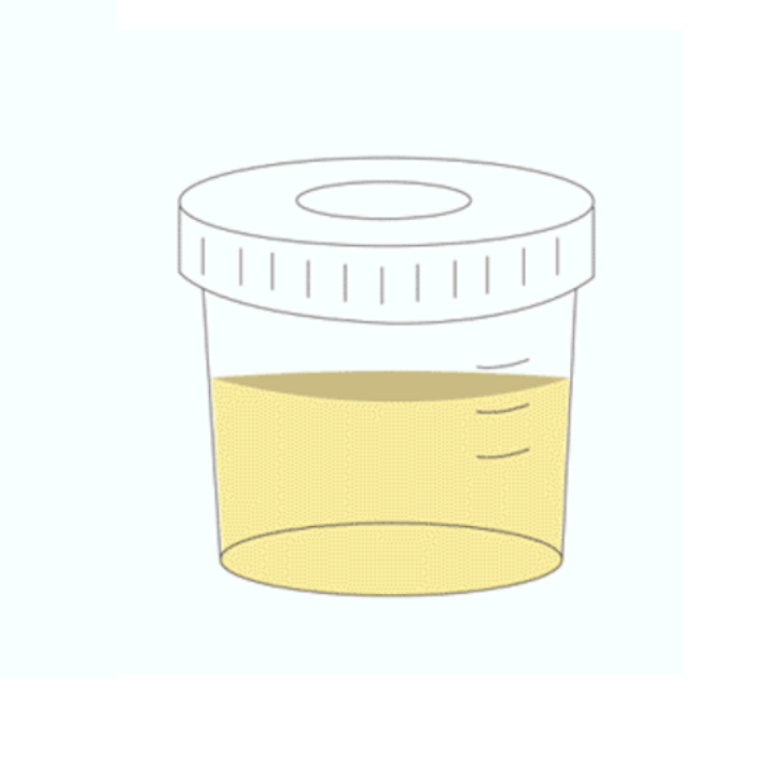
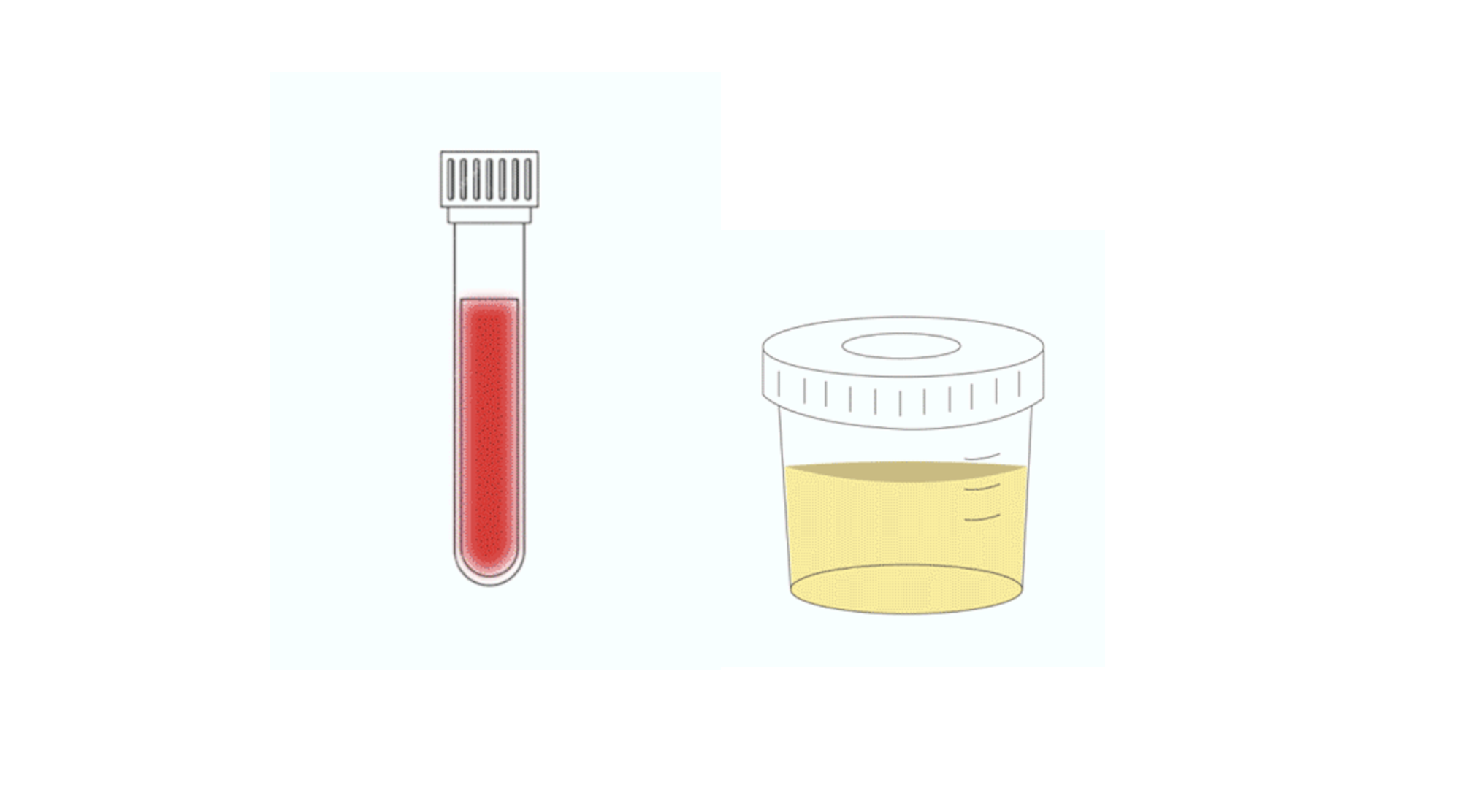
AI100 can digitise and analyse both blood and urine samples using a single integrated platform. No separate instruments, no duplicated infrastructure. One device does it all.

Blood analysis Urine microscopy Single platform
One device multiple tests — placeholder, replace with GIF
Automated cell identification — placeholder, replace with GIF

Automated cell
identification

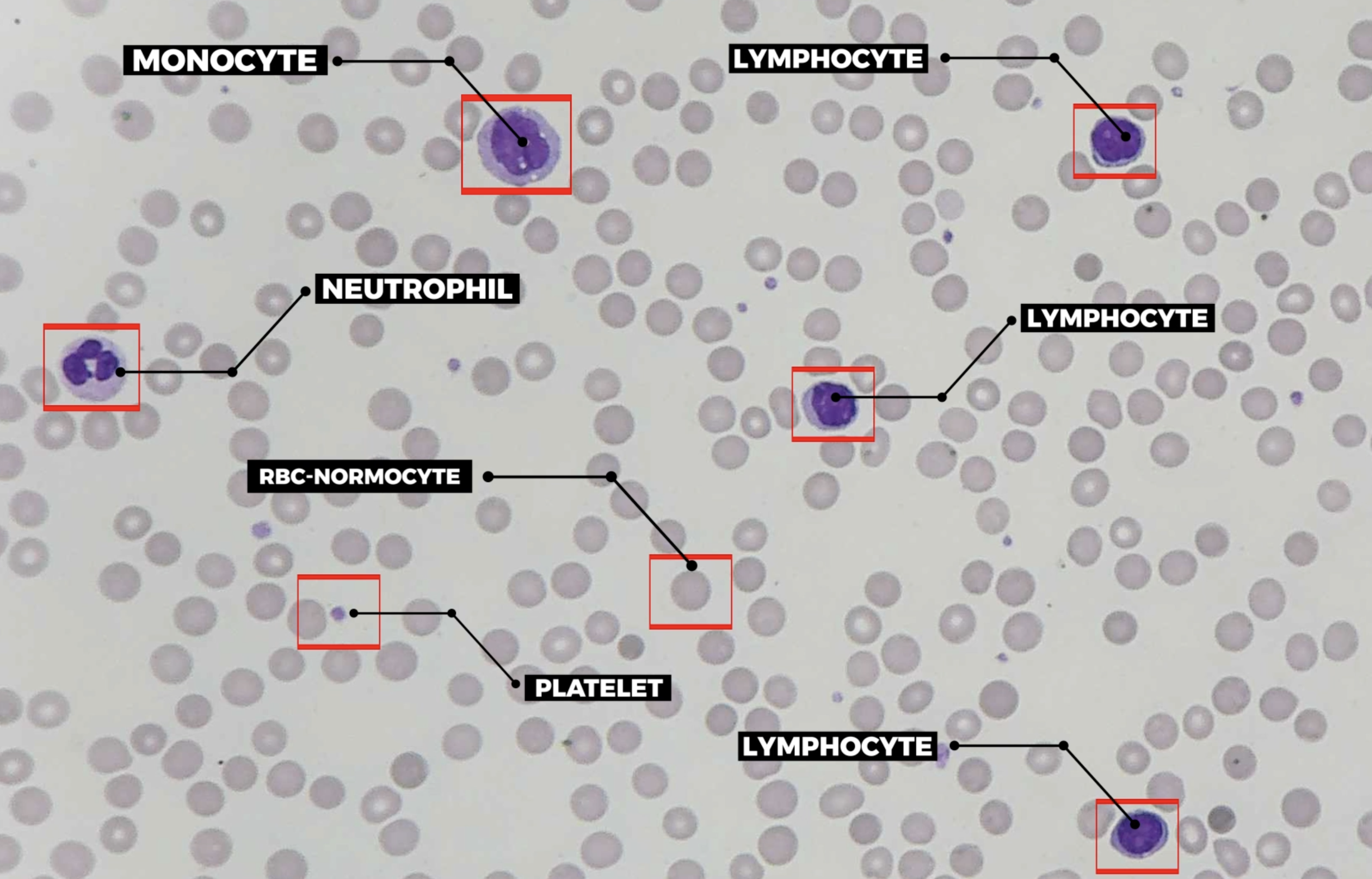
Every cell extracted from slide is classified and backed by visual evidence. AI models trained on millions of annotated cells identify 30+ cell types and flag abnormalities - transparent, explainable and overridable by the pathologist.

30+ cell types Visual evidence Pathologist override

Review from
anywhere & anytime

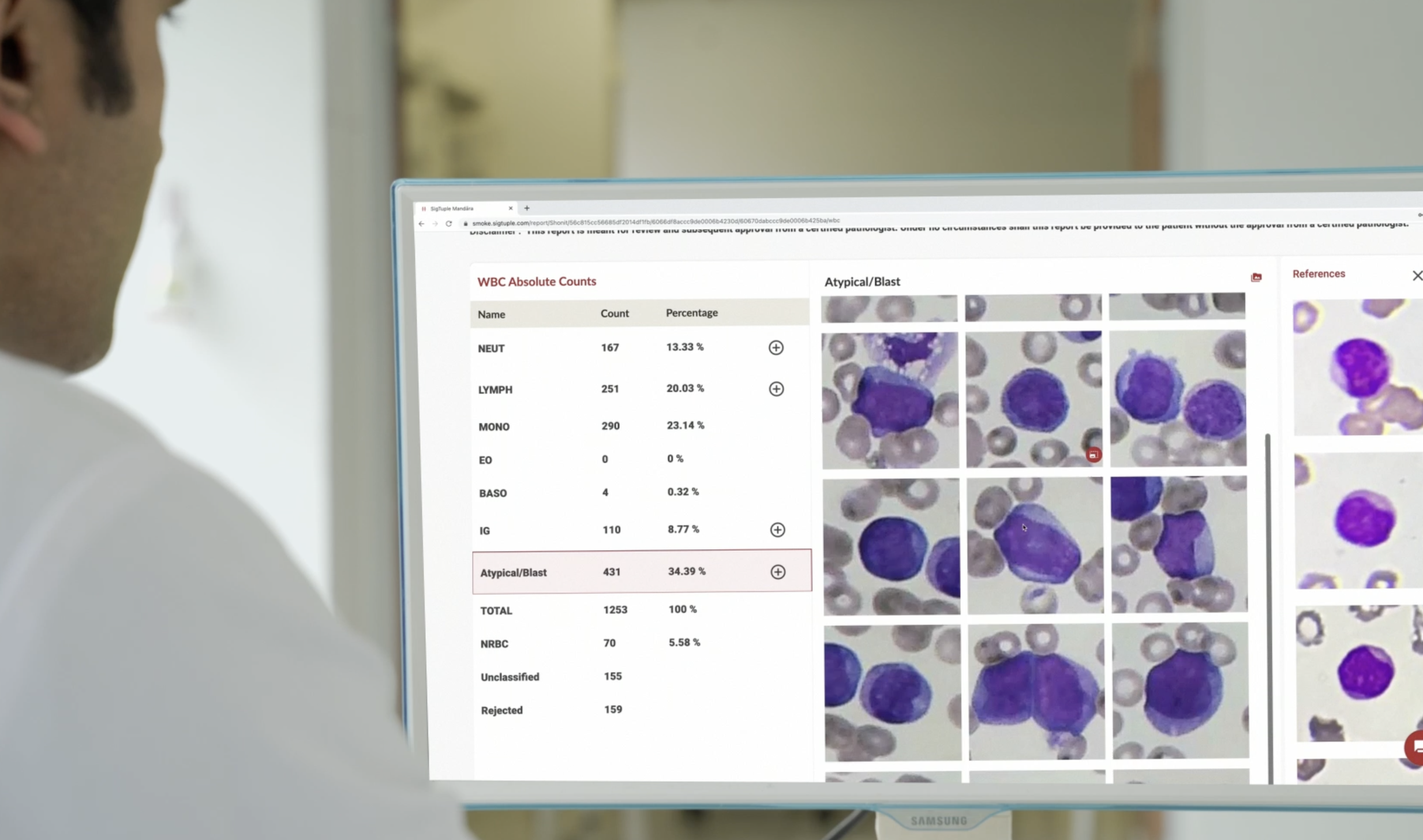
Web-enabled reports allow pathologists to work from anywhere to review AI-pre-classified cases and sign off reports from any web browser, on any internet connected device, and from any location - enabling true WFH for pathologists.

WFH for pathologists Any browser Tele-pathology
Review from anywhere — placeholder, replace with GIF
AI100 Applications

Image analysis applications

Analysers compatible with SigTuple AI100

Shonit

Shonit™- Peripheral Blood Smear Analyser

Automates the complete microscopic review of peripheral blood smears — 7-part WBC differential, RBC morphology graded to ICHS standards, and platelet classification with visual evidence.

Explore More →
Shrava

Shrava™- Urine Sediment Analyser

Automates urine microscopy — identifying RBCs, casts, crystals, yeast, epithelial cells, pus cells and organisms with visual evidence, ready for remote review.

Explore More →
Benefits

Why labs choose AI100

Ways AI100 can transform your laboratory operations.

Faster TAT

Achieve quicker turnaround time through remote review and reduced review time per sample.

🌐
Remote Collaboration

Collaborate with colleagues on special cases without being hindered by geographical separation.

🎯
Improve Patient Outcome

Highly sensitive in finding rarer cells and abnormalities

💻
Reduce Eye Strain and Fatigue

View everything on a large screen. No more peering into a microscope all day.

Unlimited Cloud Storage

No more worrying about storage running out. We take care of all your data. Forever!

Quality Check

We ensure sample preparation quality by flagging sub-optimal samples before they reach review.

🔧
Predictive Maintenance

We flag anomalies in the system to reduce the probability of any breakdown before it disrupts your workflow.

📦
Hassle-free Upgrades

Remote upgrades for better performance and new products - always on the latest AI version without disruption.

Specifications

Technical specifications

Optics40×
Blood throughput20+ slides per hour
Urine throughput40+ samples per hour
Cell types classified30+ WBC, RBC and platelet types
ImagingHigh-resolution digital camera, automated focus
StageMotorised XYZ with automated monolayer detection
ConnectivityCloud-based AI processing & unlimited storage
Stain compatibilityRomanowsky — Leishman, Giemsa, Wright's
WBC differential7-part + atypical + blasts + nRBCs
Review interfaceWeb browser — any device, any location
LIMS integrationAPI-based integration with existing LIMS
CertificationsUS FDA 510(k) + CE IVDR for Shonit · CE IVDR for Shrava
StorageCloud storage
Weight40 Kg
Dimensions485 mm (w) × 572 mm (d) × 485 mm (h)
Power60W | 100–249V 50/60Hz
FAQs

Frequently asked questions

Everything you need to know about AI100, digital morphology analysis and automated smear review.

A digital morphology analyzer is an automated instrument that combines robotic slide handling, AI microscopy and deep learning classification to perform detailed cellular morphology analysis — replacing manual microscopic review with intelligent, consistent automation. SigTuple's AI100 is a next-generation digital morphology analyzer that digitises peripheral blood smears and urine sediment at 40× resolution, enabling smear review automation across WBC differential, RBC morphology and platelet morphology assessment. Unlike traditional cell counters, a digital morphology analyzer captures full visual evidence for every cell — supporting AI morphology analysis, remote pathologist sign-off and complete elimination of inter-observer variability from the diagnostic process.

Smear review automation uses robotics to digitise a stained & prepared glass slide, then applies trained AI morphology analysis algorithms to identify and classify every cell in the monolayer. SigTuple's Shonit™ application delivers end-to-end smear review automation for peripheral blood smears — generating a full WBC differential automation output, RBC morphology grading to ICSH standards, and platelet analysis with visual evidence. The pathologist receives a pre-classified, structured report and can validate or override individual cells with a single click — combining the efficiency of automation with the precision of expert oversight.

Peripheral blood smear (PBS) analysis is the microscopic examination of a stained blood film to assess white blood cell morphology, red blood cell shape, size and colour, and platelet morphology and count estimation. It is the cornerstone of haematology workflows for detecting conditions including anaemia, leukaemia, infections and morphological abnormalities. SigTuple's AI100 automates PBS analysis through AI microscopy — digitising slides, applying AI morphology analysis algorithms, and producing ICSH-graded reports with full visual evidence. As a digital morphology analyzer, AI100 delivers smear review automation that is faster, more consistent and fully auditable.

AI morphology analysis applies deep learning models to high-resolution digital images of stained blood smears or urine sediment, pre-classifying each cell and flagging morphological abnormalities automatically. In digital pathology workflows, AI morphology analysis dramatically reduces the time pathologists spend on routine differential counting — freeing them to focus on complex or flagged cases. SigTuple's AI models are trained on millions of annotated cells and are capable of detecting subtle features — atypical lymphocytes, blast cells, hemoparasites and toxic granulations — that may be missed under time-pressured manual review. This level of AI morphology analysis is embedded in every scan processed by the AI100 platform.

Yes. WBC differential automation through AI significantly improves consistency, throughput and turnaround time in haematology workflows. SigTuple's Shonit™ performs WBC differential automation by pre-classifying white blood cells — delivering a 7-part differential with atypical cells, Immature granulocytes, and nRBCs. As part of a digital morphology analyzer workflow, WBC differential automation eliminates inter-observer variability, reduces analyst fatigue and enables high-volume processing without compromising quality. Pathologists review the AI-generated differential and apply their expertise only where clinical judgement adds value.

AI100 integrates into existing hematology workflows via bi-directional LIS integration, allowing seamless data exchange with laboratory information management systems. WBC differential automation results, RBC morphology flags and urine sediment findings are automatically transmitted to the LIS — eliminating manual data entry and reducing transcription errors. The browser-based remote pathology review interface enables pathologists to access cases from any device, while cloud storage ensures all scan data is retained indefinitely. AI100's smear review automation capabilities fit directly into existing laboratory processes with minimal workflow disruption.

Yes. AI100 is purpose-built for remote pathology review. Once AI smear review analysis is complete, the full case — all cell images, and AI morphology analysis classifications — is accessible via a secure, browser-based digital pathology interface from any location. Remote pathology review enables centralised specialist oversight across multiple laboratory sites, multi-expert consultation on complex morphology cases, and pathologist sign-off without physical presence in the laboratory. For diagnostic networks seeking to centralise their digital pathology review operations, AI100's remote pathology review capability is one of the core operational advantages.

AI100 is designed for small and medium clinical laboratories seeking to introduce AI microscopy, smear review automation and digital morphology analyzer capability without large capital investment. It suits hospital laboratories, standalone diagnostic centres and reference laboratory networks requiring FDA 510(k)-cleared, CE IVDR-compliant digital pathology capability for both peripheral blood smear analysis (Shonit™) and urine sediment analysis (Shrava™). AI100's WBC differential automation, AI morphology analysis, cloud-based architecture and browser-based remote pathology review interface make it accessible to laboratories of any size modernising their hematology and urinalysis workflows.

Ready to see AI100 in your lab?

Our specialists will run a live demo tailored to your lab's workflow and sample types.

Contact Sales